
Battle of Saraighat
The Historic Victory That Protected Assam from the Mughal Empire
The Greatest Naval Battle in Assam's History
The Battle of Saraighat, fought in 1671 CE, remains one of the most celebrated military victories in Indian history. Led by the legendary Ahom general Lachit Borphukan, the Ahom Kingdom defeated the mighty Mughal Empire on the waters of the Brahmaputra River. This remarkable victory protected Assam's independence and became a lasting symbol of courage, leadership, patriotism, and strategic brilliance.
The Background of the Conflict
The Battle of Saraighat was fought in 1671 CE between the powerful Ahom Kingdom and the Mughal Empire. It is remembered as one of the greatest military victories in Indian history and stands as a symbol of courage, patriotism, and exceptional leadership. The battle took place near Saraighat on the mighty Brahmaputra River, close to present-day Guwahati in Assam.
During the seventeenth century, the Mughal Empire under Emperor Aurangzeb sought to expand its territory into Northeast India. Assam was considered strategically important because of its fertile lands, river trade routes, and geographical position. The Mughals had attempted to conquer Assam several times, but the Ahoms repeatedly resisted these invasions.

The Rise of Lachit Borphukan
To defend Assam, King Chakradhwaj Singha appointed Lachit Borphukan as the commander-in-chief of the Ahom army. Known for his intelligence, discipline, and unwavering patriotism, Lachit immediately began strengthening the kingdom's defenses. He understood that the Mughal army was much larger and better equipped, so defeating them through direct confrontation would be difficult.
Lachit focused on careful planning, training his soldiers, improving river defenses, and preparing strategic positions along the Brahmaputra River. His leadership inspired confidence among the Ahom warriors, who were determined to protect their homeland at all costs.
Preparing for the Battle
The Mughal forces, commanded by Raja Ram Singh I of Amber, advanced toward Assam with thousands of soldiers, cavalry, artillery, and a large naval fleet. Their objective was to capture Guwahati and establish Mughal control over the region.
Instead of fighting on open land, Lachit Borphukan chose the narrow waters of Saraighat as the battlefield. The Brahmaputra River's strong currents and narrow channels reduced the Mughal advantage in numbers and allowed the smaller Ahom navy to fight effectively.
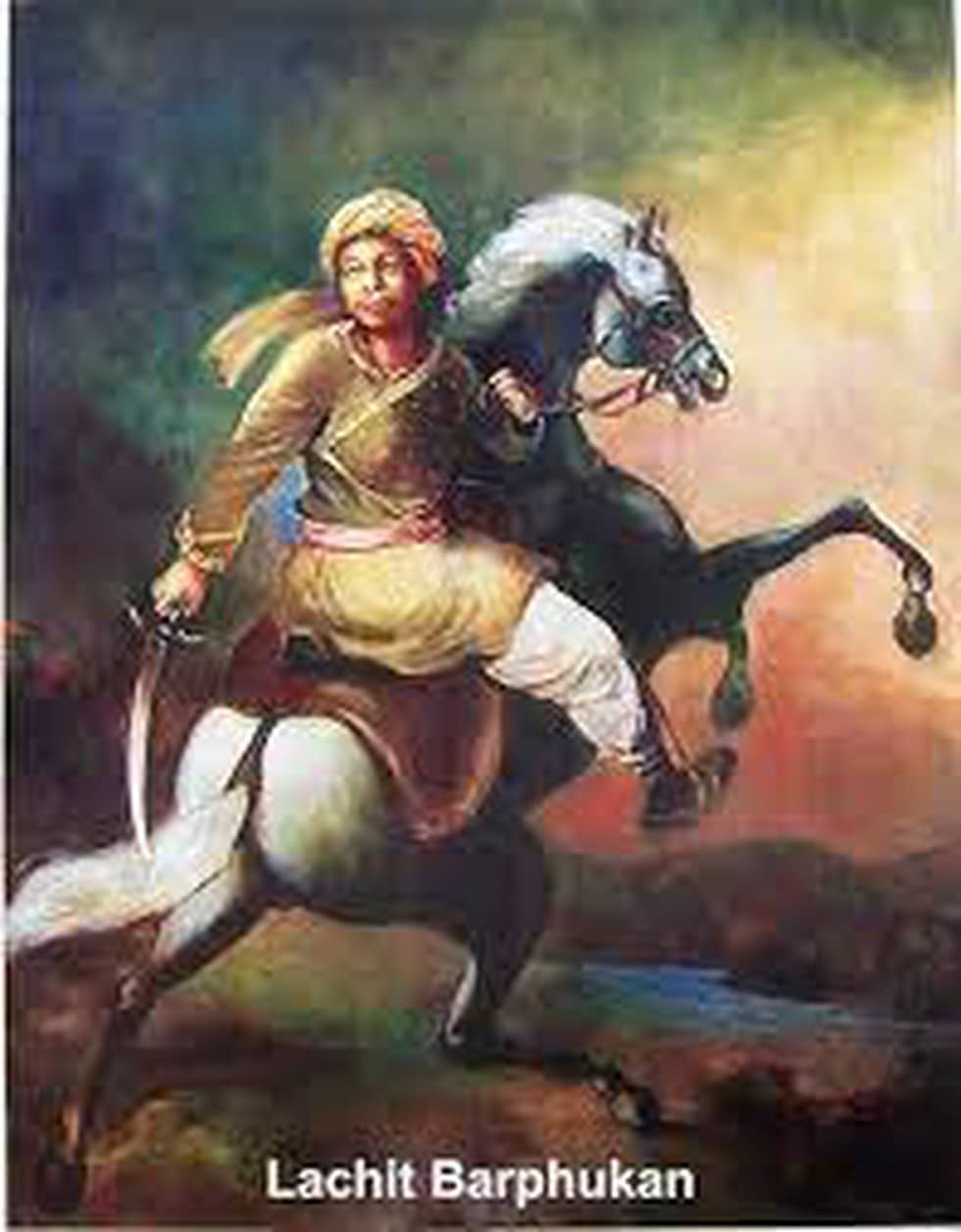
The Famous Story of Discipline
One of the most inspiring stories associated with Lachit Borphukan concerns the construction of defensive embankments before the battle. When his own uncle failed to complete his assigned work on time, Lachit ordered strict punishment despite their family relationship.
He declared that the safety of Assam was more important than personal ties. This act demonstrated his commitment to duty, discipline, and justice, earning the respect of his soldiers and the people of Assam.
The Battle on the Brahmaputra
The decisive battle began in March 1671. The Mughal fleet attempted to overpower the Ahom forces using their superior numbers and larger warships. However, the Ahoms were highly skilled in river warfare and possessed extensive knowledge of the Brahmaputra's currents, islands, and narrow passages.
Initially, the Ahom forces faced tremendous pressure. During the fighting, Lachit Borphukan became seriously ill. Despite his condition, he refused to abandon the battlefield.
Seeing some soldiers lose confidence, Lachit personally boarded a war boat and sailed toward the enemy fleet. His appearance on the battlefield inspired the Ahom warriors to fight with renewed determination.

A Historic Victory
Under Lachit's leadership, the Ahom navy launched a powerful counterattack. Their swift boats surrounded the larger Mughal vessels, preventing them from using their numerical advantage effectively.
The Mughal fleet suffered heavy losses and was forced to retreat. The victory at Saraighat successfully halted Mughal expansion into Assam and preserved the independence of the Ahom Kingdom.
Military Strategy and Leadership
Historians regard the Battle of Saraighat as a masterpiece of military strategy. Lachit Borphukan understood that victory depended not on numbers but on intelligent planning, local knowledge, and high morale.
By choosing river warfare, making effective use of geography, and motivating his soldiers, he transformed a seemingly impossible situation into one of the greatest defensive victories in Indian history.
Impact on Assam
The victory at Saraighat ensured that Assam remained free from Mughal domination. It protected the region's culture, traditions, language, and political independence for generations.
The battle also strengthened the reputation of the Ahom Kingdom as one of the most resilient and capable kingdoms in medieval India.
Lachit Borphukan's Legacy
Today, Lachit Borphukan is celebrated as one of India's greatest military leaders. Every year, Lachit Divas is observed across Assam on 24 November to honor his bravery, patriotism, and leadership.
The National Defence Academy and several military institutions in India recognize Lachit's contribution to military history. His famous words emphasizing duty above personal comfort continue to inspire soldiers, students, and citizens across the country.
Historical Importance
The Battle of Saraighat was much more than a military victory. It represented the determination of a small kingdom to defend its freedom against one of the world's most powerful empires. The courage shown by Lachit Borphukan and the Ahom soldiers became a defining moment in Assam's history.
Even today, the battle remains a source of immense pride for the people of Assam. Monuments, museums, educational institutions, and annual commemorations preserve the memory of this remarkable achievement. Visitors to Saraighat and Guwahati can still experience the historic landscape where this legendary battle took place.
More than three centuries later, the Battle of Saraighat continues to symbolize courage, patriotism, unity, and strategic brilliance. It stands as one of the finest examples of how visionary leadership and determination can overcome overwhelming odds, making it one of the greatest chapters in the journey through the history of Assam.
Historical Gallery
Explore the people, places, and battlefield that shaped one of the greatest victories in Assam's history.
Battle of Saraighat
Lachit Borphukan
Brahmaputra River
"My uncle is not greater than my country."
— Lachit Borphukan, symbolizing duty, discipline, and patriotism.